
Picture this: It’s 1987. The first Zelda game just hit shelves, The Simpsons made their TV debut, and somewhere in the tech world, a revolutionary idea was taking shape that would influence enterprise architecture for decades to come. Enter the Zachman Framework.
The Family Tree of Enterprise Architecture
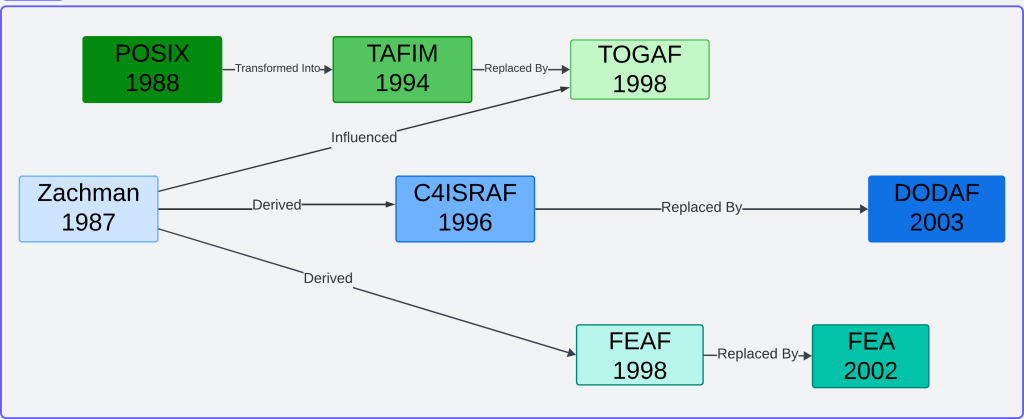
If enterprise architecture frameworks were a family, the Zachman Framework would be the patriarch. Created in 1987, it didn’t just set the stage for enterprise architecture—it built the entire theater. Nearly every major enterprise architecture framework used today can trace its lineage back to this groundbreaking model.
Think of it as architectural DNA. The Department of Defense’s architecture framework (DoDAF)? Zachman’s offspring. The widely-used TOGAF model? A direct descendant. Even the Federal Enterprise Architecture (FEA) is a part of this extended family. It’s like watching an architectural version of “Who Do You Think You Are?”
Why Was Zachman Such a Big Deal?
Before Zachman, organizations were wrestling with information systems architecture like trying to build a house without blueprints. The framework introduced a structured, top-down approach that gave organizations a clear way to view and organize their enterprise architecture. It was the difference between having a detailed map and just wandering around hoping to reach your destination.
The Plot Twist: Modern Challenges
But here’s where our story gets interesting. While the Zachman Framework’s influence is undeniable, today’s tech landscape looks about as similar to 1987 as a smartphone does to a rotary dial phone. Modern enterprises are dealing with:
- Systems that are more interconnected than a spider’s web
- Development teams pushing updates multiple times daily (hello, DevOps!)
- Software that’s more about assembling existing pieces than building from scratch
- Organizations running multiple independent system development efforts simultaneously
The Evolution We Need
This new reality doesn’t mean Zachman and its descendants are obsolete—far from it. Instead, it signals the need for evolution. Modern enterprise architecture needs to expand beyond just information systems to encompass:
- Business processes
- Enterprise strategy
- Organizational structure
- Complex system interactions
We’re no longer just architects of information systems; we’re architects of entire digital ecosystems.
Looking Forward
The Zachman Framework’s lasting legacy isn’t just in its specific approach—it’s in showing us that complex enterprise systems need structured ways of thinking about architecture. As we face new challenges in enterprise architecture, we’re building on this foundation while adapting to modern needs.
Today’s enterprise architects are like city planners in a world where buildings can change shape daily and streets can reroute themselves based on traffic. We need frameworks that are as dynamic as the systems they help us manage.
The next chapter in enterprise architecture will be written by those who can honor Zachman’s structured approach while embracing the fluid, interconnected nature of modern enterprises. After all, the best way to respect a pioneer is to keep pushing the boundaries they first helped us break through.


 Adventures in Enterprise Architecture and other IT stories
Leave a comment